
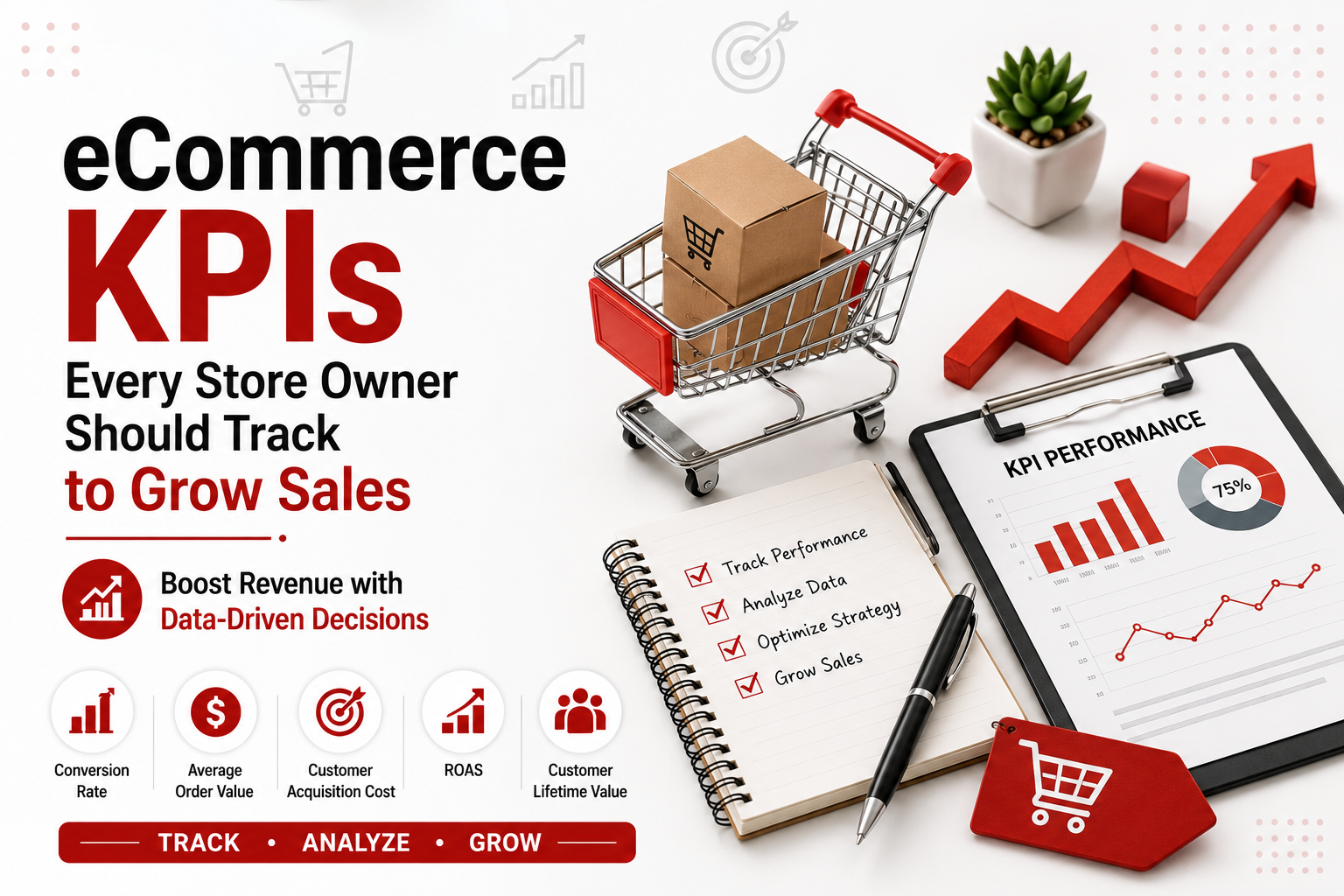
Running an eCommerce business is about much more than generating sales. While revenue is an important indicator of success, it doesn’t provide the complete picture of your store’s performance. To build a profitable and scalable online business, you need to monitor the right Key Performance Indicators (KPIs). These metrics help you understand customer behavior, measure marketing effectiveness, and identify opportunities for growth.
Whether you’re a startup or an established online retailer, tracking KPIs enables you to make informed decisions instead of relying on guesswork. At PC Digital Mantra, we help eCommerce businesses use data-driven marketing strategies to improve performance, increase conversions, and maximize return on investment. Here are the essential eCommerce KPIs every store owner should track.
1. Conversion Rate
Conversion rate measures the percentage of website visitors who complete a purchase. It is one of the most important KPIs because it shows how effectively your website turns visitors into customers. A low conversion rate may indicate issues with your website design, product pages, checkout process, or pricing strategy. Improving page speed, optimizing product descriptions, adding customer reviews, and simplifying checkout can significantly increase conversions.
2. Average Order Value (AOV)
Average Order Value (AOV) tells you how much customers spend per order. Increasing AOV allows you to generate more revenue without attracting additional visitors. Businesses can improve this metric by offering product bundles, upselling premium products, cross-selling complementary items, and providing free shipping above a minimum purchase amount. Small improvements in AOV can have a major impact on overall revenue.
3. Customer Acquisition Cost (CAC)
Customer Acquisition Cost measures how much you spend to acquire a new customer through marketing and advertising. This includes expenses on Google Ads, Meta Ads, influencer campaigns, SEO, and other promotional activities. A lower CAC means your marketing campaigns are more efficient and profitable. At PC Digital Mantra, we continuously monitor acquisition costs to ensure every marketing campaign delivers the highest possible return.
4. Customer Lifetime Value (CLV)
Customer Lifetime Value estimates the total revenue a customer generates throughout their relationship with your business. A high CLV indicates strong customer loyalty and repeat purchases. Instead of focusing only on acquiring new customers, businesses should invest in retention strategies such as loyalty programs, personalized email campaigns, and excellent customer support. Increasing customer lifetime value often leads to higher long-term profitability.
5. Cart Abandonment Rate
Many online shoppers add products to their cart but leave before completing the purchase. A high cart abandonment rate may result from unexpected shipping charges, complicated checkout processes, limited payment options, or trust concerns. Monitoring this KPI helps identify barriers that prevent customers from buying. Implementing abandoned cart emails, simplifying checkout, and displaying secure payment badges can help recover lost sales.
6. Return on Ad Spend (ROAS)
ROAS measures the revenue generated for every dollar spent on advertising. It is one of the most important metrics for businesses investing in paid marketing campaigns. A higher ROAS indicates that your advertising strategy is generating profitable returns. Optimizing audience targeting, ad creatives, landing pages, and bidding strategies can improve campaign performance. PC Digital Mantra focuses on maximizing ROAS through continuous campaign optimization and performance analysis.
7. Website Traffic
Understanding where your visitors come from is essential for evaluating your marketing efforts. Website traffic can originate from organic search, paid advertising, social media, email marketing, referrals, or direct visits. Analyzing traffic sources helps you determine which channels produce the best results and deserve additional investment. Quality traffic is more valuable than simply increasing visitor numbers.
8. Bounce Rate
Bounce rate represents the percentage of visitors who leave your website after viewing only one page. A high bounce rate often indicates poor user experience, slow loading speed, irrelevant content, or ineffective landing pages. Improving website navigation, mobile responsiveness, page speed, and content relevance can encourage visitors to explore more pages and increase the chances of conversion.
9. Repeat Purchase Rate
Acquiring a new customer typically costs more than retaining an existing one. Repeat Purchase Rate measures how many customers return to make additional purchases. Businesses with strong customer retention generally enjoy higher profits and lower marketing costs. Personalized recommendations, loyalty rewards, exclusive offers, and excellent post-purchase service can encourage customers to shop again and strengthen long-term relationships.
10. Refund and Return Rate
Refunds and product returns directly impact profitability and customer satisfaction. A high return rate may indicate inaccurate product descriptions, sizing issues, poor product quality, or damaged deliveries. Monitoring this KPI helps businesses identify recurring problems and improve both product presentation and customer experience. Reducing returns not only increases profit margins but also builds customer trust.
Why These KPIs Matter
Tracking eCommerce KPIs allows business owners to understand what is working and what needs improvement. Instead of making decisions based on assumptions, you can use real-time data to optimize marketing campaigns, improve customer experience, increase sales, and reduce unnecessary expenses. Monitoring these metrics regularly also helps identify trends before they become significant problems, allowing businesses to adapt quickly in a competitive market.
At PC Digital Mantra, we believe that successful eCommerce marketing is built on measurable results. Our team helps online businesses track critical KPIs, optimize digital marketing campaigns, improve website performance, and create strategies that drive sustainable growth. By combining SEO, paid advertising, conversion rate optimization, and advanced analytics, we help businesses make smarter marketing decisions and achieve long-term success.
Conclusion
Success in eCommerce is not measured by sales alone. The most successful online stores continuously monitor key performance indicators to understand customer behavior, improve marketing performance, and maximize profitability. Metrics such as Conversion Rate, Average Order Value, Customer Acquisition Cost, Customer Lifetime Value, Cart Abandonment Rate, Return on Ad Spend, Website Traffic, Bounce Rate, Repeat Purchase Rate, and Refund Rate provide valuable insights into every stage of the customer journey.
If you’re looking to grow your online store with a data-driven marketing strategy, PC Digital Mantra can help. Our team specializes in helping eCommerce brands improve visibility, attract qualified traffic, optimize conversions, and achieve measurable business growth through customized digital marketing solutions. By focusing on the right KPIs, your business can make informed decisions, improve customer satisfaction, and build a profitable, scalable eCommerce brand.